The Overthinking Off-Switch: How 20 Minutes of Yoga Nidra Can Soothe Anxiety.

Updated: Sep 3, 2025
Discover a Calming Practice That Melts Mental Noise and Restores Inner Peace

Many of us know the feeling of being trapped in our own heads. You try to focus on the present, but your mind replays yesterday's conversations or rehearses for tomorrow's meetings. This endless loop of overthinking isn't a sign of weakness; it's a symptom of a nervous system stuck on high alert. It makes finding true peace nearly impossible.
We often try to solve this by forcing ourselves to "stop thinking." We attempt meditation by clearing our minds, only to feel more frustrated. Distractions fail to silence the noise in our heads. We are taught that the answer to a busy mind is more effort, discipline, and control. But what if the solution isn't about trying harder? What if it’s about trying a different approach?
What if the cure for overthinking isn't a switch you can force, but a gentle process you can follow? What if just 20 intentional minutes could give your mind the rest it craves without demanding silence or control?
This is the essence of Yoga Nidra: a practice of conscious, deep relaxation that acts as a gentle off-switch for an overthinking mind. This post will guide you in understanding why our brains get stuck in a loop, the neuroscience behind how Yoga Nidra helps, and how this simple 20-minute practice can melt away mental noise and restore a profound sense of inner peace.
The Overthinking Cycle: Why We Get Stuck
To understand how to turn off the mental chatter, we first need to grasp why it's so hard to do so. Overthinking isn't just an annoying habit; it’s a symptom of a nervous system that feels unsafe.
When we are in a state of high stress or anxiety, our brain’s default mode network (DMN) goes into overdrive. This network is responsible for self-referential thought and mind-wandering. Instead of shutting off when it’s not needed, it keeps running, generating endless loops of worry about the past and future. It's like a car engine revving even when in neutral.
This overactivity has real consequences for our mind and body:
Fractured Focus: When your mind is in constant chatter, your ability to focus diminishes. You may find yourself reading the same paragraph multiple times or losing your train of thought in conversations.
Increased Anxiety: The more you overthink, the more you feed anxious thought patterns. Your brain becomes accustomed to this state, making it harder to break free from the cycle.
Physical Tension: Mental noise translates directly to physical tension. Your jaw may clench, your shoulders might hunch, and your breath becomes shallow. Your body holds onto the stress generated by your mind.
Emotional Exhaustion: Trying to control or quiet a racing mind is exhausting. It drains your mental energy, leaving you feeling tired, irritable, and emotionally depleted.
What you need isn't more willpower; you need a tool that can gently interrupt this cycle and guide your nervous system back to calm.
The Off-Switch: How Yoga Nidra Calms Mental Chatter
Yoga Nidra, or "yogic sleep," is one of the most effective forms of Non-Sleep Deep Rest (NSDR). It guides you into a state between waking and sleeping, where your body is deeply relaxed but your mind remains subtly aware. This liminal state is where the magic happens. It’s the perfect place to soothe an anxious mind because it doesn’t ask you to do the impossible.
Here’s how Yoga Nidra acts as a gentle off-switch for overthinking:
The Body as an Anchor: One powerful part of the practice is the rotation of consciousness—a systematic body scan. A guided voice directs your awareness to different parts of your body, moving quickly enough that your mind doesn’t have time to get lost in thought. This process grounds your mind in the present moment, anchoring it to the physical sensations of your body rather than the abstract worries in your head.
Giving the Mind a Job: For those who struggle with "clearing the mind," Yoga Nidra is a revelation. It doesn't ask your mind to be empty; it gives it a specific, structured job. By following the guidance, your mind is occupied just enough to stop generating its own noise. It’s like giving a child a puzzle to solve so they stop running around the room.
Accessing a Deeper State: The practice intentionally shifts your brainwaves. It guides you from the active beta state (where overthinking lives) into the alpha state (calm and relaxed) and even into the deeper, more restorative theta state. This neurological shift creates a profound sense of peace and mental clarity. It’s not about forcing yourself to feel calm; it's about creating the physiological conditions for calm to naturally arise.
The Brain Science Behind the Peace
A 20-minute Yoga Nidra session is not just a break; it’s a neurophysiological reboot that actively works to soothe an anxious, overthinking mind. It’s a powerful investment in the long-term health of your brain.
It Boosts GABA: Yoga Nidra helps increase levels of GABA (gamma-aminobutyric acid), a key neurotransmitter that acts as a natural brake for your brain. GABA helps to quiet the overactive neural firing common in anxiety, creating a sense of calm and stability.
It Balances Brain Activity: fMRI studies show that during Yoga Nidra, the prefrontal cortex, responsible for higher-level thinking and emotional regulation, becomes more active. At the same time, the amygdala, the brain's alarm center, quiets down. This balancing act is crucial for moving out of a state of reaction and into a state of intentional calm.
It Enhances Neuroplasticity: Consistent practice of Yoga Nidra can help create and strengthen new, calmer neural pathways. Just as repetitive thinking reinforces the overthinking habit, consistent rest can train your brain to favor a state of calm. You are essentially teaching your brain a new way of being—one that is less reactive and more resilient.
This practice is used by athletes, executives, and military personnel not because it’s a fluffy luxury, but because it’s a functional, science-backed tool for improving mental performance, emotional regulation, and overall well-being.
Your 20-Minute Practice: What to Expect
Our "Calm the Mental Chatter" practice is designed to be a gentle and inviting experience. You don't need any special skills or equipment—just a willingness to pause and listen.
Here’s what you can expect from this 20-minute session:
Finding Your Comfort: You'll be invited to lie down in a comfortable position, perhaps on a yoga mat, a bed, or a couch. The goal is to feel completely safe and supported, allowing you to let go of any need to move.
The Guided Journey: You’ll be guided by a calming voice through a simple and powerful process that includes a settling breath, a systematic body scan, and gentle cues to bring your awareness to your breath and simple sensations.
The Absence of Pressure: This is not a test. It's perfectly okay if your mind wanders or if you don't feel completely calm right away. The benefit comes from simply showing up and allowing the practice to work. Your only job is to listen and let the guidance wash over you.
This 20-minute practice is an ideal tool for moments when you need to:
Hit the reset button on a busy day.
Recharge after a period of intense mental effort.
Quiet your mind before bed for more restful sleep.
Find calm when you feel your thoughts starting to spiral.
Why 20 Minutes is a Game-Changer
While even a 5-minute reset is beneficial, the 20-minute duration of this practice is a game-changer for overthinking and anxiety. This length allows your nervous system to fully downshift from its active state into a truly restorative one.
The 20-minute session provides enough time to:
Reach a Deeper State of Rest: It gives your brain the time it needs to move from the alpha state into the deeper, more profound theta state. This is where the most powerful healing and rest occur.
Release Deep-Seated Tension: Overthinking often creates physical tension that a shorter practice can't fully address. The 20-minute journey allows you to consciously and subconsciously release tension held in your muscles, jaw, and entire body.
Create a Lasting Effect: A longer, more intentional practice helps solidify the new neural pathways of calm. The effects are more profound and tend to last longer throughout your day, giving you a greater sense of inner peace and resilience.
Think of it not as a big time commitment, but as a powerful act of self-care that yields incredible returns.
Tips for a More Effective Practice
To get the most out of your "overthinking off-switch," keep these simple tips in mind:
Give Yourself Permission: The most important step is to give yourself permission to pause. You don’t have to earn your rest.
Use Headphones: Headphones create a sound container that blocks out external distractions, making it easier for you to turn your attention inward.
Find a Dedicated Spot: Having a specific place to practice, even if it's just a corner of your living room, can signal to your nervous system that it’s time to relax.
Set an Intention: Before you begin, set a simple, positive intention (sankalpa) in your mind, such as "I am at peace," or "I am calm." This gives the practice a clear purpose and helps ground you.
Trust the Process: The power of Yoga Nidra lies in its effortlessness. You don’t have to force anything. Simply show up, lie down, and let the guided voice lead you.
The Off-Switch is Within You
In a world that constantly bombards you with noise, it's easy to feel like you're losing control of your mind. But Yoga Nidra offers a different path. It shows you that you don't have to fight the mental chatter. Instead, you can learn to turn it off.
This 20-minute practice is more than just a meditation; it's a skill you can cultivate. It’s a way of gently telling your nervous system, "You're safe now. You can soften." It’s a tool for transforming the chaos of overthinking into a state of profound inner peace.
Try the practice and discover how to find your own off-switch.
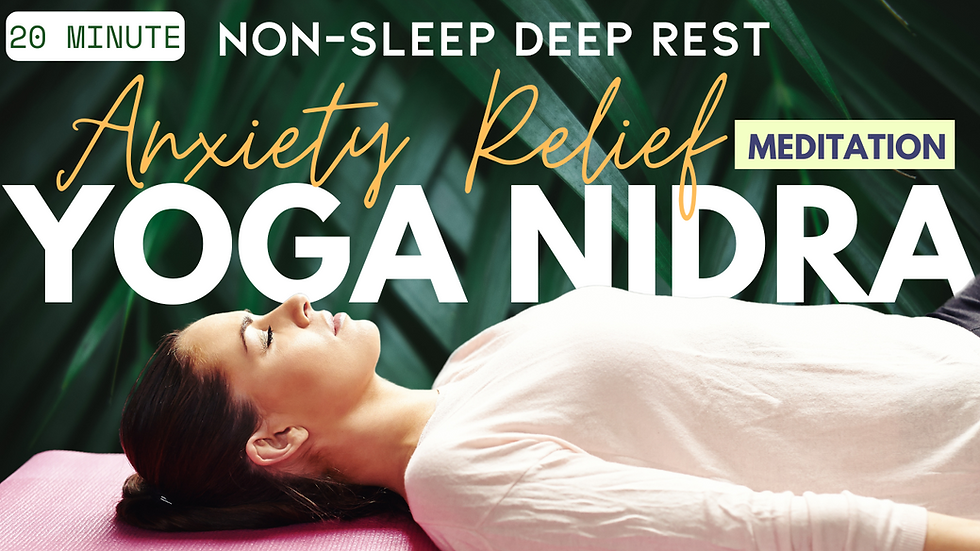
Allow this practice to become your daily refuge. Consistent moments of NSDR will ripple outward, infusing your days with renewed energy, emotional ease, and inner resilience.
MORE RESOURCES TO GUIDE YOUR JOURNEY:
Join the Free 3-Day Calm Reset Yoga Nidra Meditation Experience.
I’d love to invite you into a gentle, three-day journey of Yoga Nidra—a mini-series designed to whisper your nervous system toward ease.
Each day, you’ll receive a lovingly crafted guided meditation, weaving breath, body awareness, and soothing imagery to cradle you into profound rest.
No experience needed—just a soft space and your willingness to pause.
Together, we’ll nurture deep relaxation, release accumulated tension, and rediscover the simple joy of “being” rather than doing. This is your warm invitation to lean into stillness and reset from the inside out.
Reserve your free spot in the 3-Day Calm Reset and let the restorative power of Yoga Nidra unfold.
About Ignite and Flow
Ignite and Flow is an online meditation and wellness studio dedicated to helping you rest, heal, and reconnect with your inner self.
Through guided practices rooted in self-love, deep rest, and emotional healing, we offer supportive, soul-nourishing tools to help you let go of overwhelm, release old stories, and create space for calm, clarity, and renewal.
✨ How Ignite and Flow can support your journey:
🌙 The Calm Collective – A digital meditation and wellness studio membership offering Yoga Nidra and guided meditations for emotional well-being, nervous system regulation, and better sleep. A sanctuary of stillness for your everyday life. Explore the membership.
In addition to weekly blog posts, free resources, and a supportive podcast, Ignite and Flow is here to guide you—one restful breath, one healing moment at a time.
👉 Learn more at www.igniteandflow.com

Comments