The Secret to Deep Rest: A Beginner's Guide to Unlocking True Relaxation.

Tired of feeling wired? Discover a simple 10-minute practice that melts away stress and leaves you feeling completely refreshed, even on your busiest days.

What If 10 Minutes Could Change Everything?
We live in a culture that glorifies busy. Productivity is a prized virtue, and the very idea of slowing down can feel less like a choice and more like a guilty luxury.
We’re taught that our worth is tied to how much we can accomplish, and in that relentless pursuit, we often find ourselves running on empty. We’re exhausted, overstimulated, and emotionally drained, yet we feel a persistent pressure to keep pushing forward.
But what if you didn’t need a full day off or a week-long retreat to feel human again? What if you could hit the reset button on a frazzled nervous system in the middle of a hectic day?
What if just ten minutes—a coffee break's worth of time—could shift your entire being from "fight or flight" to a profound state of grounded calm?
Welcome to Yoga Nidra, a practice of profound rest that anyone can do, anytime, anywhere. Its unique power lies in its simplicity.
If you’re new to meditation, if you’ve felt overwhelmed by mindfulness apps, or if you’re just too tired to add another "thing" to your to-do list, this one’s for you. It’s not about doing more; it's about doing less to gain more.
What Is Yoga Nidra (and Why Is It So Powerful)?
Yoga Nidra, or "yogic sleep," is a deeply restorative form of guided meditation that brings you into a state between waking and sleeping.
Unlike traditional sleep where you become unconscious, in Yoga Nidra you remain perfectly aware and conscious as your body slips into a state of deep, effortless relaxation.
This unique state is what makes it so transformative. You're not fighting to clear your mind; you're simply listening, allowing the gentle guidance to do the work for you.
The practice works by guiding you through layers of awareness—from the physical body and the breath, to emotions, sensations, and simple visualizations.
This systematic process helps you disengage from the usual stress loops that keep your mind racing. It’s like gently turning down the volume on the constant inner chatter until all you hear is a quiet hum of peace.
The benefits of this practice are far from just anecdotal. Studies show that a consistent Yoga Nidra practice can:
Calm the nervous system: By activating your body's "rest and digest" response, it helps counteract the effects of chronic stress.
Support better sleep and mood: By training your body to relax deeply, it can improve the quality of your sleep and leave you feeling more emotionally balanced throughout the day.
Reduce anxiety and overwhelm: It provides a safe space to process and release difficult emotions without becoming entangled in them.
Help rewire habitual thought patterns: By planting a positive intention (sankalpa) at the beginning and end of the practice, it helps to sow seeds of change in your subconscious mind.
Best of all? You don’t need any previous experience. You don’t need to sit upright or "empty your mind." You just need to lie down, get cozy, and listen.
Why Traditional Rest Isn’t Always Enough
You might be getting your recommended 7-8 hours of sleep and still waking up exhausted. Or maybe you spend your weekends "relaxing" by binge-watching TV, only to feel just as tired when Monday rolls around.
Why? Because not all rest is created equal.
Dr. Saundra Dalton-Smith, a physician and author, teaches that there are seven distinct types of rest. True rest isn’t just about closing your eyes; it’s about restoring the specific part of you that’s depleted.
Let’s look at the seven types and how Yoga Nidra uniquely addresses many of them at once:
Physical Rest: This is the most obvious form of rest. While you lie down for Yoga Nidra, your body enters a state of deep stillness, allowing your muscles and organs to repair and rejuvenate without the effort of movement.
Mental Rest: If you’re an overthinker, this is for you. Yoga Nidra’s guided meditation gives your mind a structured task—to simply listen and follow along—which stops the constant problem-solving and mental "to-do" lists that keep you from relaxing.
Emotional Rest: This is the space to be authentic and feel your feelings without judgment. Yoga Nidra provides a non-judgmental container where you can safely acknowledge emotions, release them, and reset your emotional state.
Sensory Rest: We are constantly bombarded by light, noise, and information from screens. In Yoga Nidra, you close your eyes and turn inward, unplugging from all external input and giving your senses a much-needed break.
Creative Rest: This type of rest helps restore your imagination. The visualizations and inner journey of Yoga Nidra can unlock new perspectives and rekindle your creative spark, without the pressure of having to "produce" anything.
Social Rest: If you spend your day with people, you’re likely in need of social rest. The solitude of a Yoga Nidra practice allows you to disconnect from social performance and simply be with yourself.
Spiritual Rest: This type of rest is about finding a sense of connection and purpose. For many, Yoga Nidra’s ability to quiet the external world helps them connect to a quiet inner knowing, a sense of peace that exists beyond the noise of everyday life.
Yoga Nidra is like a multi-vitamin for your rest needs. In just ten minutes, you can begin to restore yourself on multiple levels, giving your entire system a chance to truly recuperate.
Your First Yoga Nidra: What to Expect
Our beginner-friendly practice, "Yoga Nidra for Beginners: Your First 10-Minute Deep Rest," is designed to be easy, welcoming, and immediately effective. It’s an invitation, not an obligation.
Here’s how to prepare for your very first session:
Find a quiet space: It doesn't have to be perfect, just a place where you won’t be disturbed for 10-15 minutes.
Lie down comfortably: On a yoga mat, on your couch, or even in your bed. The goal is to be completely comfortable.
Get cozy: Use a blanket to stay warm, and place a small pillow under your head or knees if it helps. The more comfortable you are, the easier it is to let go.
Press play and close your eyes: Your only job is to listen and follow the guidance.
The practice will gently guide you through a simple process of body awareness, breath, and visualization. You don’t need to do anything "right." There is no way to fail. The practice will do the work for you.
You might find your mind wandering, and that's okay. When you notice it, simply and gently bring your awareness back to the sound of the voice.
Many people report feeling:
Calm and grounded, as if a weight has been lifted.
More focused and emotionally balanced, even after just one session.
Like they’ve had a refreshing nap, even if they didn’t fall asleep.
It’s a simple exhale into presence.
The Science Behind the Stillness
The magic of Yoga Nidra isn't a mystery; it's a measurable physiological shift. During the practice, you are gently guided through different brainwave states.
Beta (14-30 Hz): This is your normal, waking state. It's when you're alert, focused, and engaged in problem-solving. This is the state we spend most of our waking hours in, and it's what keeps us feeling "wired."
Alpha (8-13 Hz): As you begin to relax and your eyes close, your brain shifts into the alpha state. This is associated with a calm, meditative focus, and it's the bridge between conscious thought and the subconscious.
Theta (4-7 Hz): This is the sweet spot of Yoga Nidra. Theta is the brainwave state associated with deep relaxation, dreaming, and a profound sense of inner connection. It's the state where powerful insights and a feeling of timeless peace can arise.
Delta (1-3 Hz): In a very deep practice, you may even touch on the delta state, the brainwave of deep, dreamless sleep.
By systematically guiding your brainwaves from the frantic beta state down to the restorative alpha and theta states, Yoga Nidra gives your nervous system a chance to move out of its constant "fight or flight" mode.
This is where your body begins the important work of cellular repair, immune function, memory consolidation, and emotional processing. It's like giving your entire system a gentle software update, without the effort or overwhelm.
Is 10 Minutes Really Enough?
Yes. In fact, for a beginner, ten minutes is the perfect amount of time. It's long enough to feel the effects, but short enough to easily fit into your day.
Even a short Yoga Nidra practice can:
Interrupt your stress cycle: A ten-minute reset can break the momentum of a stressful day and prevent you from spiraling into a state of chronic anxiety.
Offer a mental reset: It’s a powerful way to clear your head in the middle of a hectic day, giving you a fresh perspective for the hours ahead.
Begin to retrain your body: By consistently showing your body that it's safe to be still, you’re training it to feel safe and calm more often.
Think of it like brushing your nervous system. Not every moment of self-care has to be epic or life-changing. Sometimes, it’s the tiny, consistent rituals that begin to shift everything.
You Don’t Have to Earn Your Rest
Here’s the most important reminder of all: you are not a machine.
You don’t have to finish your to-do list to be allowed to pause.
You don’t have to feel completely overwhelmed to deserve care.
You don’t have to do it perfectly.
Yoga Nidra meets you exactly as you are—tired, busy, curious, or overwhelmed. And it offers you a gentle invitation to lay it all down now.
Ready to Begin?
This 10-minute Yoga Nidra is your invitation to try a new kind of rest. One that meets you in the middle of the chaos and gently brings you home to yourself.
🎧 Listen now: Yoga Nidra for Beginners: Your First 10-Minute Deep Rest

Allow this practice to become your daily refuge. Consistent moments of NSDR will ripple outward, infusing your days with renewed energy, emotional ease, and inner resilience.
MORE RESOURCES TO GUIDE YOUR JOURNEY:
Join the Free 3-Day Calm Reset Yoga Nidra Meditation Experience.
I’d love to invite you into a gentle, three-day journey of Yoga Nidra—a mini-series designed to whisper your nervous system toward ease.
Each day, you’ll receive a lovingly crafted guided meditation, weaving breath, body awareness, and soothing imagery to cradle you into profound rest.
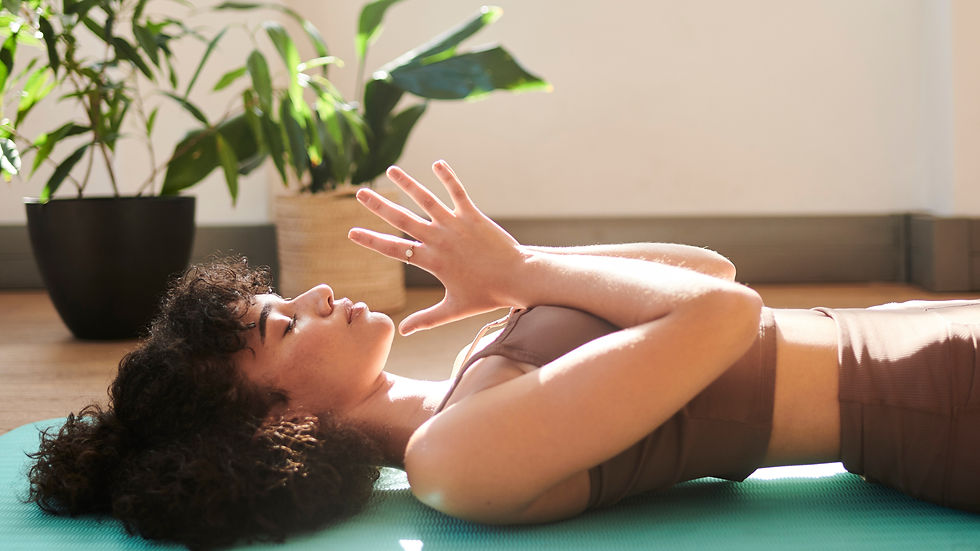
No experience needed—just a soft space and your willingness to pause.
Together, we’ll nurture deep relaxation, release accumulated tension, and rediscover the simple joy of “being” rather than doing. This is your warm invitation to lean into stillness and reset from the inside out.
Reserve your free spot in the 3-Day Calm Reset and let the restorative power of Yoga Nidra unfold.
About Ignite and Flow
Ignite and Flow is an online meditation and wellness studio dedicated to helping you rest, heal, and reconnect with your inner self.
Through guided practices rooted in self-love, deep rest, and emotional healing, we offer supportive, soul-nourishing tools to help you let go of overwhelm, release old stories, and create space for calm, clarity, and renewal.
✨ How Ignite and Flow can support your journey:
🌙 The Calm Collective – A digital meditation and wellness studio membership offering Yoga Nidra and guided meditations for emotional well-being, nervous system regulation, and better sleep. A sanctuary of stillness for your everyday life. Explore the membership.
In addition to weekly blog posts, free resources, and a supportive podcast, Ignite and Flow is here to guide you — one restful breath, one healing moment at a time.
👉 Learn more at www.igniteandflow.com


Comments